
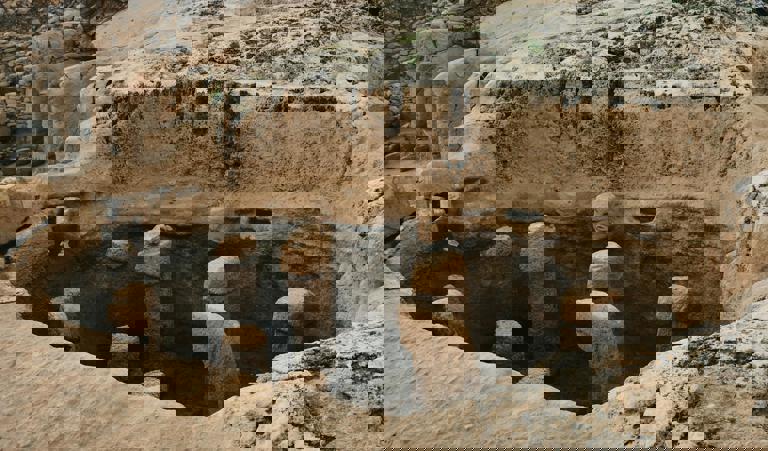
In a remarkable turn of events, a team of archaeologists working alongside construction crews in central London have uncovered a cache of lost sculptures buried several metres beneath the site of a planned commercial building. The discovery, made last Tuesday, is sending ripples of excitement through the local historical and artistic communities as experts scramble to determine the origins and significance of the unearthed artefacts.
The sculptures, numbering nearly a dozen, range from small statuettes to larger-than-life figures, some depicting classical themes while others are more abstract in design. Dr. Fiona Maxwell, lead archaeologist on the site, described the find as "one of the most surprising and significant discoveries in recent London history," noting the remarkable preservation of several pieces despite their apparent age and the urban environment's impact.
Most of the pieces were discovered in what appears to have been a sealed underground chamber, possibly a storage vault dating back to the Victorian era. Early assessments suggest that the sculptures could be more than a century old, although further analysis will be required to confirm their exact ages. The presence of protective wrappings and signs of deliberate concealment have added layers of intrigue to the find.
Local historians are already debating the origins of the sculptures, with theories ranging from looted wartime treasures to works intentionally hidden during periods of social unrest. Professor Anthony Harrington from University College London speculates that "these could well have been part of a private collection that was concealed for safekeeping, possibly during World War II or an earlier crisis, and then simply forgotten as the city evolved above it."
Initial reactions from London’s arts community have been enthusiastic, with many calling for the immediate preservation and public display of the sculptures. Chloe Redfern, curator at the Museum of London, stated, "This is a discovery that could reshape our understanding of London's artistic heritage. Each piece holds clues to the aesthetic values, social context, and circumstances of its concealment, offering a rich trove for researchers and the public alike."
The sculptures themselves are diverse in both material and style. Some are crafted from marble and limestone, showing intricate classical motifs, while others are made from bronze and have a more modern or even experimental feel. Among the more enigmatic finds is a bronze bust exhibiting stylised features never before seen in British art, prompting speculation about the influence of foreign artists or collectors.
Officials from Historic England have been quick to secure the site and implement protective measures, aiming to prevent any potential damage or looting. The area has been cordoned off, and conservation teams are now assessing how to safely extract and transport the artefacts for further study. According to a spokesperson, the find is likely to remain on-site for several weeks while legal and preservation protocols are followed.
Experts say the discovery raises fascinating questions about London’s hidden history beneath the bustling modern metropolis. Dr. Maxwell points out that, “London’s constant redevelopment often unearths artefacts from its many pasts, but seldom with such artistic and cultural importance. These sculptures stand as silent witnesses to the city’s layered and often turbulent narrative.”
The news has also sparked interest among the general public, with crowds gathering near the site to catch glimpses of the excavations and voice curiosity about the mysterious cache. Local resident Mark Hensley expressed his excitement, saying, “It’s incredible to think what lies beneath our feet. I walk these streets daily, never imagining treasures like these were hidden so close by.”
Historians and archaeologists are now working closely with police to investigate whether records exist of lost or stolen artworks that could match these items. The discovery has also triggered a review of similar London dig sites, in case other hidden chambers await beneath the city. The prospect of more forgotten treasures fuels both academic and public anticipation.
Meanwhile, debates are emerging over the eventual fate of the sculptures. Some cultural leaders are calling for the pieces to remain in London for public viewing and study, while others advocate for their placement in national institutions. There are also suggestions that, should ownership or provenance be established, descendants or former owners might have legitimate claims, making the future of the artworks a complex legal matter.
As forensic analysis and historical research continue, the city awaits further revelations about these striking relics from its past. Specialists hope that materials analysis and archival detective work will soon shed light on the identities of the artists, the patrons who commissioned the works, and the exact circumstances that led to their remarkable concealment. For now, the lost sculptures of London have provided a thrilling chapter in the ongoing story of the city’s hidden artistic legacy.